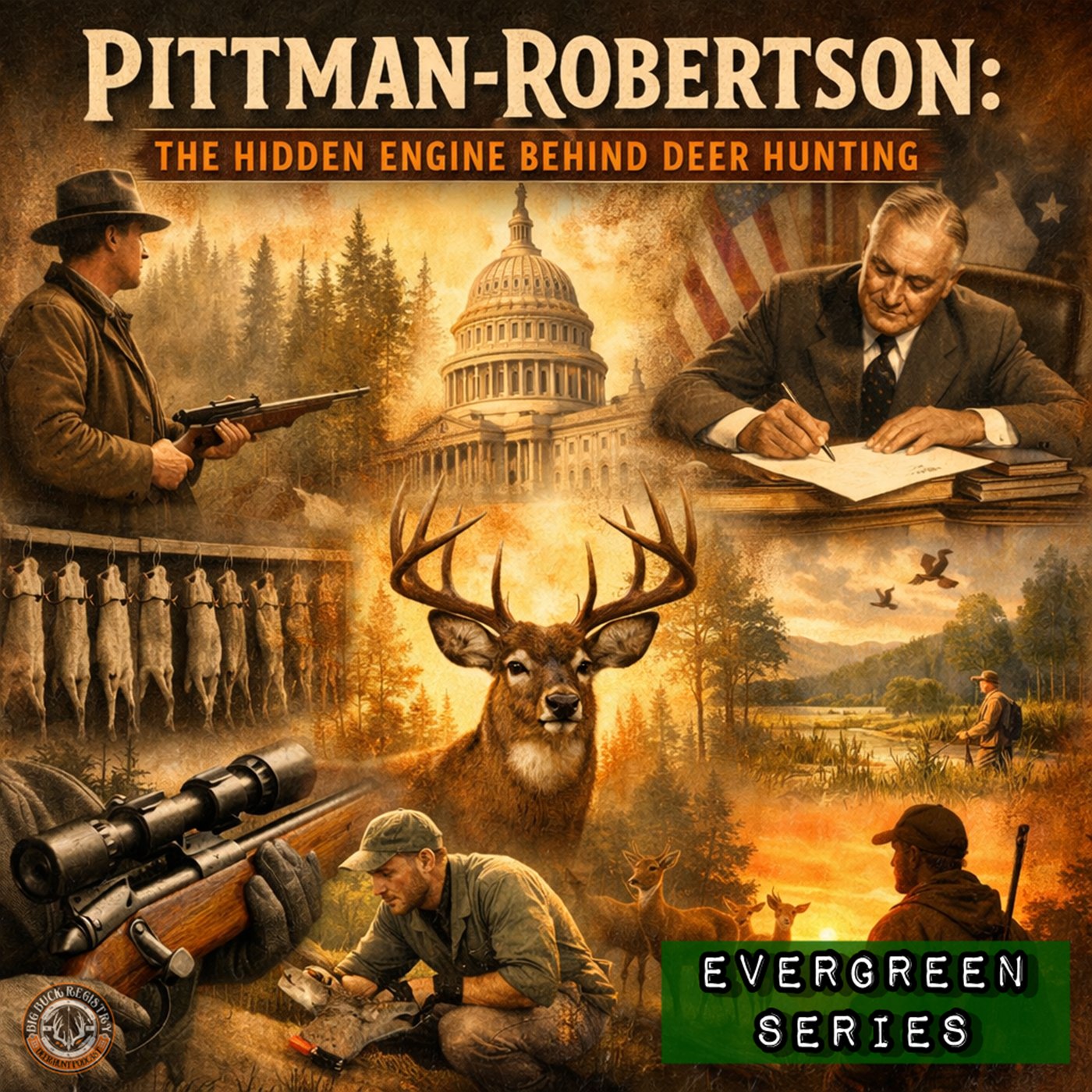
Introduction
Imagine a time when seeing a deer in the woods was a rare event – when white-tailed deer and other game were so scarce that many states had no hunting season at all. Just over a century ago, this was reality. Unregulated overhunting and massive habitat loss had driven wildlife populations to the brink. Deer, turkeys, ducks – all were vanishing. Hunters faced empty forests, and America risked losing its wildlife heritage. Fortunately, sportsmen and conservationists rallied behind a revolutionary idea in 1937 that would turn the tide. Enter the Pittman-Robertson Act, a law that not only rescued deer and other game from near-extinction but also transformed wildlife conservation in the United States. In this deep dive, we’ll explore what the Pittman-Robertson Act is, why it was created, and how it funds the thriving deer populations and rich hunting opportunities we enjoy today. We’ll also look at the critical role hunters (and firearm manufacturers) play in this success, the Act’s impacts on deer and habitat over time, and why – despite challenges and the passing of decades – Pittman-Robertson is still as important as ever for deer hunters.
LISTEN TO OUR PODCAST ON THE PITTMAN ROBERTSON ACT
What Is the Pittman-Robertson Act?
The Pittman-Robertson Act, officially known as the Federal Aid in Wildlife Restoration Act of 1937, is a landmark U.S. conservation law that provides dedicated funding for wildlife and habitat conservation. In simple terms, Pittman-Robertson (often abbreviated “P-R”) established a special federal excise tax on hunting-related equipment – guns, ammunition, and archery gear – with the proceeds earmarked exclusively for wildlife restoration programs. The tax is collected from manufacturers (so it’s built into the price of firearms, ammo, bows, etc.) and then funneled to the U.S. Fish & Wildlife Service, which distributes the funds to state wildlife agencies for conservation work.
How big is this tax? The law initially set an 11% tax on long guns (rifles, shotguns) and ammunition, and later a 10% tax on handguns (added via amendments in the 1970s). Archery equipment was also added. This isn’t a sales tax at the retail counter but a tax on the wholesale/manufacturer level – yet ultimately, hunters and shooters pay it whenever we purchase gear. The genius of Pittman-Robertson is that it takes this money out of the general treasury and puts it into a dedicated Wildlife Restoration Fund that can only be used for wildlife and habitat projects. In other words, our hunting equipment dollars go straight back into conservation. States can then tap into these funds for approved projects such as habitat improvement, wildlife research, land acquisition for wildlife management areas, reintroduction of species, hunter education, and even building shooting ranges for public use. Pittman-Robertson essentially created a cycle where hunters pay for conservation, ensuring the wildlife resources we depend on are sustained for future generations.
One more important aspect: the Act built in safeguards to make sure the money is used as intended. States must match a small portion (typically 25%) of project costs (often using revenue from hunting license sales), and states are required by law to keep all hunting license fees within their own wildlife agencies (no diverting those dollars to unrelated programs). This “user pays, user benefits” model means that the more people participate in hunting and shooting sports (and buy gear and licenses), the more funding flows back into wildlife conservation. It’s a brilliantly self-sustaining cycle – one that has been funding our wildlife programs for over 85 years now.
Why Was It Created? (A Brief History)
In the early 20th century, America’s wildlife was in crisis. Decades of unregulated market hunting (commercial hunting for meat, hides, and feathers) and widespread habitat destruction had decimated game populations. White-tailed deer, once numbering in the tens of millions across the country, had plummeted to perhaps only 300,000 by around 1900 – a 99% decline that left deer extinct in many states. In places like Ohio, Illinois, Kansas and beyond, whitetails were completely wiped out by the early 1900s. Other iconic game animals fared no better: wild turkeys were gone from much of their range, elk and bighorn sheep were scarce, waterfowl were over-harvested, and predators like wolves and cougars were nearly eradicated. The situation was so dire that by the 1930s, seeing a deer track was a newsworthy event for old-timers to reminisce about.
This crisis sparked the rise of the conservation movement. Visionaries like Theodore Roosevelt, Aldo Leopold, and George Bird Grinnell (among others) led efforts to establish game laws, hunting licenses, and refuges. Early milestones included the Lacey Act of 1900 (banning interstate shipment of illegally taken wildlife) and the creation of the National Wildlife Refuge system. States formed fish and game departments and started enforcing hunting seasons and bag limits. However, these fledgling efforts all lacked one crucial element: funding. Wildlife agencies were scraping by on license sales and whatever general funds legislatures might spare, which during the Great Depression wasn’t much at all.
Enter Congressman A. Willis Robertson of Virginia and Senator Key Pittman of Nevada – and an unsung hero named Carl Shoemaker (an Oregon wildlife advocate and Senate committee staffer). They had a game-changing idea: redirect an existing excise tax on firearms and ammo to create a permanent funding source for wildlife conservation. (Yes, an excise tax on sporting arms/ammo actually predated the P-R Act – since 1919 it had been collected, but the money just went to general government revenue. The new law would make sure those dollars went back into wildlife.) Robertson and Pittman sponsored the bill in Congress, but it was people like Shoemaker and famed cartoonist-turned-conservationist J.N. “Ding” Darling who built support behind the scenes. In a savvy move, they even enlisted grassroots pressure – for example, Shoemaker got women’s garden clubs to lobby a reluctant committee chairman until he agreed to advance the bill!
The Federal Aid in Wildlife Restoration Act (Pittman-Robertson Act) passed Congress with broad support and was signed by President Franklin D. Roosevelt on September 2, 1937. It officially took effect July 1, 1938. The timing was perfect: America was ready to invest in rebuilding its wildlife. Almost immediately, states lined up conservation projects to use this new infusion of funds. By 1938, the first P-R funded project was underway at Ogden Bay, Utah – restoring wetlands crucial for waterfowl. Within a year, most states passed laws protecting their license revenues (as required), and federal grants started flowing to state game agencies. The era of modern, well-funded wildlife management had begun, thanks to Pittman-Robertson.
How the Funding Works (Hunters and Industry Paying for Conservation)
The beauty of Pittman-Robertson is in its self-funding design. Every time hunters or shooting enthusiasts buy firearms, ammunition, or archery equipment, a portion of that sale (the excise tax) goes into the Wildlife Restoration trust fund. Manufacturers pay the tax up front, but of course it’s built into the price we pay as consumers. You might not notice it on the price tag, but for example, about 11 cents of every dollar spent on a new rifle, shotgun or box of ammo – and 10 cents of every dollar for a new handgun – is going toward this fund. Even those buying guns for non-hunting purposes (target shooting or personal defense) contribute, which means the funding base is broad. In recent years, firearm and ammo sales have been booming, which in turn has made Pittman-Robertson funding hit record highs. In Fiscal Year 2023 alone, the program raised nearly **$1.2 billion nationwide for conservation – an all-time record, topping the previous year’s $1.1B. Since 1937, more than $25 billion in Pittman-Robertson funds have been distributed to states for wildlife projects. It’s truly one of the most successful conservation funding models ever devised.
So, how do states actually get and use the money? It’s allocated by a formula based on each state’s land area and number of licensed hunters, ensuring fair distribution (larger states and those with more hunters get more funds). States typically must put up 25% matching funds (often from hunting license revenue) to get a 75% P-R fund reimbursement for an approved project. This encourages states to keep their own funding strong (through license sales or state conservation funds) to leverage the federal dollars. The projects eligible are wide-ranging but all tied to wildlife restoration and management: examples include buying land for wildlife management areas, improving or restoring habitat (planting food plots, conducting controlled burns, wetland restoration, etc.), research and surveys of wildlife populations, introducing or stocking game species, and hunting access enhancement. Importantly, part of P-R (especially the funds from handgun and archery taxes) is earmarked for hunter education programs and shooting ranges (up to half of those specific revenues). That means hunter safety classes, archery ranges, and firearm range facilities across the country often get built or improved with Pittman-Robertson dollars – directly supporting the hunting community.
It’s worth emphasizing the user-pays, everyone-benefits nature of this system. Hunters, sport shooters, and the firearm industry foot the bill by purchasing equipment (essentially a voluntary self-imposed tax), and the benefits go to all wildlife and all citizens who enjoy healthy wildlife populations and wild lands. Even if you’ve never bought a hunting license, if you enjoy observing deer or hearing elk bugle on a fall morning, you’ve reaped the rewards of Pittman-Robertson-funded conservation. And for those of us who are hunters, we can take pride in the fact that our community has collectively contributed billions to conservation. In essence, we as hunters “invest” in the resource, and that investment pays off in richer wildlife and hunting opportunities. This cooperative arrangement between hunters, firearm manufacturers, and government was unprecedented in 1937 – a true partnership that endures to this day. It set the template for the “North American Model of Wildlife Conservation,” where wildlife is professionally managed as a public resource, funded largely by hunters and anglers. (In fact, the success of P-R later inspired the Dingell-Johnson Act of 1950, which does the same thing for fisheries conservation using excise taxes on fishing tackle and boats.)
The Deer Hunter’s Payoff: Wildlife Recovery and Abundant Game
For deer hunters specifically, Pittman-Robertson has been nothing short of a miracle. Remember those bleak early 1900s when whitetails were practically gone in many places? Fast-forward to today: thanks to science-based management enabled by P-R funding, white-tailed deer have staged a massive comeback. From a low of only a few hundred thousand deer nationwide around 1900, the whitetail population has exploded to around 30 million today – roughly a hundred times more deer than a century ago. In fact, by the late 20th century, whitetails had not only recovered but expanded beyond their original range in some areas. Many states today actually grapple with overabundant deer in certain regions – a problem unimaginable in 1937! This wildlife success story is often directly credited to the funding and programs made possible by the Pittman-Robertson Act.
It wasn’t just deer, of course. Wild turkeys, once extirpated from most states, were reintroduced and thrive now. Elk have been re-established in many parts of their former range. Wood ducks, pronghorn antelope, black bears – numerous species rebounded from historic lows. Pittman-Robertson funding allowed state wildlife agencies to conduct reintroduction and stocking programs – for example, trapping surplus deer in areas where they survived and releasing them into suitable habitat where they’d been wiped out. In the 1940s and 50s, many states carried out deer restocking across counties that had no herds; those efforts were often bankrolled by federal P-R grants covering traps, transport, and monitoring. The result was that by mid-century, deer were back in huntable numbers across much of the country. Ohio, to illustrate one state’s rebound, had zero deer harvest for decades (deer hunting was completely closed from 1900 until 1943). With restoration help from P-R, Ohio held a limited 3-day deer season in 1943 – the first in over 40 years. By 1950, 40 of Ohio’s 88 counties had a short deer season and hunters took about 4,000 deer. Fast-forward to the present: Ohio’s deer season now lasts months, and in the 2019-20 season hunters harvested 184,000 deer in that state. Similar stories played out in state after state – what once were rare, protected animals are now thriving game populations supporting robust annual harvests. Hunters today enjoy longer seasons and far greater success than their grandfathers could’ve imagined. In fact, since Pittman-Robertson’s enactment, the number of hunters in the U.S. has more than doubled and the number of hunting days/opportunities has increased dramatically in every state. We literally have more game and more time to hunt because of this Act.
Just as important as the animals themselves is the habitat. A huge portion of Pittman-Robertson funds has been used to purchase, protect, and improve wildlife habitat – the forests, fields, and wetlands that deer and other game need to thrive. States have acquired millions of acres of land for Wildlife Management Areas (WMAs), state forests, and refuges using P-R dollars as a cornerstone. These lands provide food, cover, and breeding areas for deer and also public hunting access for sportsmen. If you’ve ever hunted a state-managed WMA or walked through a restored wetland, chances are Pittman-Robertson helped make it possible. Habitat work funded by P-R includes planting mast-producing trees, improving forest structure through timber management, controlled burning to renew early successional growth, creating watering sources, and more. For instance, the very first P-R project in Utah’s Ogden Bay involved improving wetlands – showing that habitat conservation was at the heart of the Act from day one. Over the decades, millions of acres of habitat have been conserved or enhanced nationwide. Deer have directly benefited from this – better habitat quality means healthier herds and more deer on the landscape.
The Act also provided means to professionalize wildlife management. It funded university research on deer biology and ecology, helping managers understand herd dynamics, nutrition, and diseases. It paid for thousands of wildlife biologists, conservation officers, and habitat technicians at state agencies. Before P-R, many state wildlife agencies were understaffed and relied on guesswork; after P-R, they could afford trained experts and scientific surveys (such as aerial deer counts, harvest data analysis, etc.). This led to more effective regulations – for example, setting bag limits or season lengths that ensured deer harvests were sustainable. In short, Pittman-Robertson money brought science and stewardship into the equation, replacing the old uncontrolled free-for-all. The North American wildlife recovery of the 20th century – often called the “greatest conservation story ever” – was fueled in large part by Pittman-Robertson dollars working hand-in-hand with hunters.
How Deer Hunters Benefit – Then and Now
If you’re a deer hunter, the Pittman-Robertson Act benefits you directly every time you head into the woods. The most obvious benefit is abundant game to hunt. Without the habitat restoration and management paid for by P-R, we simply wouldn’t have the deer numbers we do today. Our seasons would be shorter (or non-existent), bag limits minimal, and the experience far less rewarding. Instead, many states now boast record deer populations (or healthy stabilized populations) that can support lengthy seasons and generous harvests, because decades of conservation rebuilt those herds from the ground up.
Hunters also benefit from the expanded hunting opportunities and access that P-R funds have created. Think of the public lands open to deer hunting – state game lands, wildlife management areas, national wildlife refuges – many were purchased or improved using P-R money. For example, a state might use P-R grants to buy a tract of prime deer habitat, establish it as a wildlife area, plant food plots and create trails, then open it for public hunting. That’s a new place you can go hunt deer, thanks to the Act. Even on private lands, deer frequently roam across landscapes that have been improved by conservation practices promoted through P-R-funded research and extension programs.
Another direct benefit is hunter education and shooting ranges. If you took a hunter safety class when starting out, that program likely received P-R funding assistance. States use P-R grants to print hunter education materials, train instructors, and even supply .22 ammo or archery gear for youth programs. Safer, more knowledgeable hunters mean a better hunting community for all of us. Additionally, Pittman-Robertson funds can cover up to 75% of the cost of building or improving public shooting ranges (with states matching 25%). This is why, in many states, you’ll see nice rifle and archery ranges on wildlife agency lands – giving hunters a place to sight in rifles or practice shooting. Those facilities exist largely because the firearms and archery industry taxes feed back into things that directly help hunters hone their skills.
Importantly, while game species (like deer) are the primary focus, the benefits spill over to all wildlife and to society. Healthy deer habitat is also habitat for countless other creatures – from songbirds and rabbits to pollinators and even rare non-game species. When a state wildlife agency acquires river bottomland for deer and turkey habitat, that land also protects water quality and provides open space for recreation like hiking or birdwatching. In this way, deer hunters’ dollars create a conservation ripple effect that benefits ecosystems and the general public. Deer hunters can take pride in being a driving force behind conserving America’s natural heritage.
There’s also an economic benefit that comes full circle to hunters. With thriving wildlife and good hunting, more people buy licenses, gear, and travel to hunting areas – supporting rural economies and generating even more excise-tax revenue for conservation. It’s been estimated that the return on investment of Pittman-Robertson funds is enormous – one study cited an 800% to 1500% return in benefits for every dollar of tax collected. Think about that: by paying a bit extra for your ammo, you’re actually ensuring far greater value in outdoor experiences, ecosystem services, and future opportunities. In short, deer hunters get far more out of Pittman-Robertson than we pay in, which is why the hunting community overwhelmingly supports this model.
Challenges and Controversies
No successful program lasts 85+ years without facing some challenges. For the most part, the Pittman-Robertson Act has enjoyed strong bipartisan support and is regarded as a conservation triumph. But there have been a few bumps and debates worth noting:
- Attempts to Undermine or Repeal the Excise Tax: Every so often, someone suggests that taxing guns and ammo is unfair – framing it as an undue burden on Second Amendment rights or on gun owners who may not hunt. The most notable recent instance was in 2022, when a bill called the RETURN Act (H.R. 8167) was introduced, aiming to eliminate the Pittman-Robertson excise tax altogether. The proposal shocked the hunting and conservation community, because it threatened to obliterate the funding that state wildlife agencies depend on. The bill claimed other federal funds could replace it, but in reality it would have meant a huge loss for game species conservation – essentially defunding the very programs that restored deer, turkey, elk, and more. Conservation groups from the NRA to Ducks Unlimited to the Congressional Sportsmen’s Caucus united to oppose the plan, and it failed to advance (several co-sponsors pulled their support after public outcry). This episode highlighted that we can’t take Pittman-Robertson for granted – hunters and conservationists must stay vigilant against any attempt to divert or remove these funds. The good news is that, historically, sportsmen themselves asked for this tax and have consistently defended it. Even the firearms industry, which technically pays the tax, has supported P-R because they know it sustains the wildlife and hunting that drive their business (a classic win-win).
- Debate Over Use of Funds: By law, Pittman-Robertson funds must be used for wildlife restoration and hunter-related programs. Some critics (often outside the hunting community) have argued that state agencies focus too much on game species and hunting opportunities when spending these dollars. They point out that hunters pay the tax and thus projects tend to cater to hunters (e.g. creating more access or stocking game), whereas non-game wildlife may get less attention. On the flip side, some gun owners who don’t hunt have questioned why their purchase of a firearm for, say, personal defense should be taxed to support wildlife at all. These debates are relatively minor in the grand scheme – the vast majority of funds go to broadly beneficial conservation work that helps ecosystems, not just target species. Nonetheless, it’s an ongoing balancing act: ensuring game populations and hunting opportunities are enhanced (as the law intends) while recognizing that all wildlife – game and non-game – ultimately benefit. In recent years, many state wildlife agencies have used P-R funds in ways that also assist non-game species (for example, habitat improvements that help songbirds or pollinators alongside deer). Additionally, there are complementary proposals like the Recovering America’s Wildlife Act which seek to fund non-game conservation with other revenue sources, taking some pressure off the P-R model to fund everything.
- Hunter Numbers and Funding Trends: A looming challenge is the decline in hunting participation over the long term. Pittman-Robertson is fundamentally tied to the number of people buying guns and hunting gear. In the past decade, firearms sales have actually been strong (driven in part by target shooters and other factors), resulting in high revenue. But the number of licensed hunters has been slowly shrinking as a percentage of the population. If fewer young people take up hunting, and if the current surge in firearm purchases cools off, the growth in P-R funding could stagnate or decrease. Wildlife agencies that rely on these funds could face budget shortfalls for conservation programs. Some states have already seen their hunting license revenue dip and have had to get creative to recruit new hunters (mentoring programs, outreach to non-traditional audiences, etc.). The “conservation funding dilemma” is that we’ve been very successful, but it’s largely been on the backs of hunters/anglers – a group that isn’t as large (proportionally) as it was mid-century. Ensuring the next generation of hunters keeps the tradition alive is critical not just for hunting’s future, but for wildlife conservation’s future. The Pittman-Robertson system itself will remain vital – we may just need to expand the base (for instance, some have floated the idea of a similar excise tax on outdoor recreation gear like backpacking equipment, so hikers and birdwatchers contribute too). For now, hunters and shooters continue to be the primary funders, and we need to sustain those numbers.
- Controversies in Implementation: There have been occasional squabbles about specific uses of P-R funds – for example, building shooting ranges in wildlife areas (some local residents might object to the noise), or projects that trigger environmental review. In one case, the U.S. Fish & Wildlife Service faced a lawsuit for approving P-R funds for a state project without sufficient NEPA (environmental) analysis. These instances are rare and usually resolved by better planning. By and large, Pittman-Robertson dollars are spent on widely supported projects, and oversight ensures they’re used appropriately. Compared to most government programs, P-R is remarkably efficient and uncontroversial – it literally pumps money back into every state for things most people agree on, like preserving wildlife and natural areas.
Why It’s Still Important Today
The Pittman-Robertson Act remains as important in 2026 as it was in 1937, if not more so. Wildlife conservation is an ongoing effort – it’s never “done.” While we’ve brought deer, elk, and other game back from low numbers, new challenges constantly emerge: habitat continues to be lost or fragmented by development; diseases like Chronic Wasting Disease threaten deer herds in many states; invasive species and climate change alter ecosystems. Combatting these issues requires resources – funding for research, habitat management, and monitoring. Pittman-Robertson is a cornerstone of providing those resources. Without it, state wildlife agencies would struggle mightily to respond to crises (like a sudden disease outbreak in deer) or to proactively manage habitats to keep deer populations healthy. In essence, P-R funds the infrastructure of conservation: the biologists, land managers, and programs that keep our wildlife robust.
Just as importantly, Pittman-Robertson upholds a powerful conservation ethic. It embodies the principle that those who enjoy and use the wildlife resource have a responsibility to invest in it. This principle – often called the American System of Conservation Funding – has led to incredible successes. It fosters a sense of ownership and pride among hunters. We often say hunters were the original conservationists, and P-R is proof in the pudding. It’s a virtuous cycle we can’t afford to break. As our RMEF friends put it, every time someone buys hunting gear or ammo, they are contributing to conservation – it’s a model where the user pays but everyone benefits, and it has stood the test of time. Non-hunters might not even realize that every deer they see or every hike they take on a wildlife area is subsidized by hunters’ dollars. Maintaining that link between hunting and conservation is crucial for continuing public support of hunting as a positive force.
Furthermore, Pittman-Robertson has proven adaptable and has even grown. Congress has adjusted it over the years to cover new needs (like the hunter education emphasis added in the 1970s). As of recent, annual funding distributions hit record levels, showing that when more Americans participate in shooting and hunting, wildlife wins. For deer hunters, this means a bright future if we continue the legacy: introducing new hunters, supporting pro-conservation legislation, and yes, buying those licenses and gear that make a difference. The Act’s importance today also highlights unity – it was born from a coalition of hunters, industry, and conservationists all agreeing on a common goal. In an era where finding consensus is difficult, Pittman-Robertson is a refreshing example of common-ground success that benefits wildlife and people across all 50 states.
Conclusion
Sitting in a tree stand on a crisp fall morning, as a whitetail deer slips quietly through the oak ridges, a deer hunter might not be thinking about federal excise taxes or 1930s legislation. But in a very real way, that moment is brought to you by the Pittman-Robertson Act. It’s the reason you have healthy deer populations to hunt and public lands to hunt them on. It’s why wildlife agencies have the funds to manage herds and habitats, ensuring that deer hunting remains sustainable year after year. For over 85 years, this ingenious act has funneled hunters’ passion and dollars into restoring North America’s wildlife – creating a legacy of conservation success unrivaled in the world.
The next time you tag a buck or fill your freezer with venison, take a moment to appreciate the system that made it possible. Hunters like us asked for Pittman-Robertson and our community has kept it thriving. In a world of change, the Pittman-Robertson Act stands as a testament to what we can achieve when hunters, conservationists, and industry work together for the future of wildlife. As deer hunters, we are not just participants in our sport – we are investors and stewards, paying it forward so that our children and grandchildren can experience the thrill of a deer hunt in healthy, wildlife-rich woods.
So yes, Grandpa was right when he said seeing a deer used to be a big deal. Thanks to the foresight of past generations and the enduring power of the Pittman-Robertson Act, today we live in a deer hunter’s golden age. Let’s ensure it stays that way. The next time you buy a box of ammo or a new bow, remember – you’re not just gearing up for yourself, you’re contributing to one of America’s greatest conservation stories. And that is something every deer hunter can be proud of.
Leave a Reply